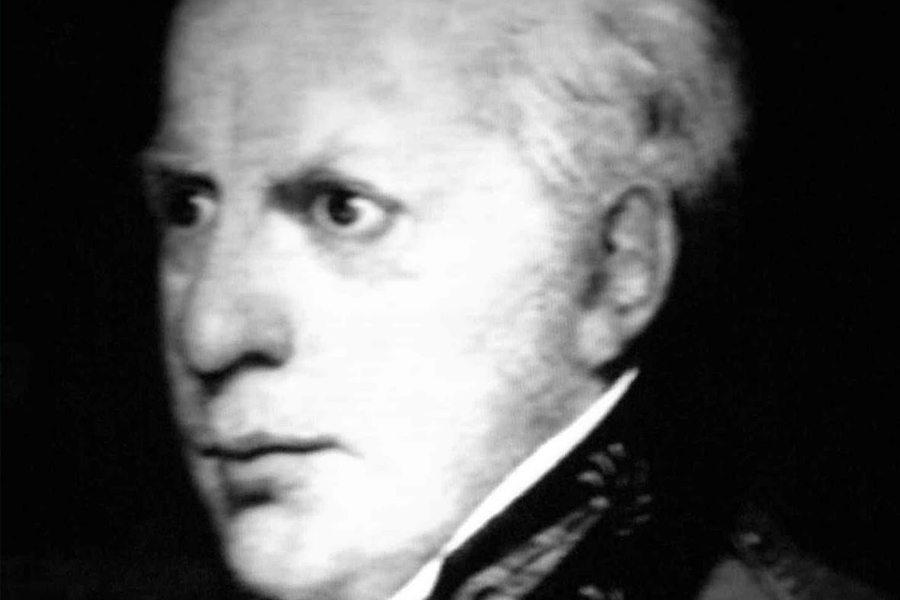
I first stumbled upon Georg Nikolaus Von Nissen while tracing the threads of musical history. His story pulled me in like a quiet current beneath a grand symphony. Born on 22 January 1761 in Haderslev Denmark Norway he lived until 24 March 1826. This Danish diplomat poet and music enthusiast stepped far beyond his official duties. He became the steadfast partner to Constanze Mozart the widow of the legendary composer. Their union shaped not only a family but the enduring preservation of Wolfgang Amadeus Mozart’s genius.
Early Years and Entry into Diplomacy
Georg Nikolaus Von Nissen grew up in a modest household. His father Jens Nissen entered the world around 1729. His mother Anna Elisabeth Zoega arrived in 1723 and passed around 1784. The family ties extended to notable Danish circles. By 1781 he had finished schooling and secured a post as authorized agent for the General Post Office in Copenhagen. Numbers tell part of the tale: at age 20 he already navigated administrative waters with precision.
In 1792 he joined the Danish foreign service. Three years later in 1795 he received his posting to Vienna as charge d affaires. There in 1797 he rented rooms in the home of Constanze Mozart. She had faced widowhood since 1791 and juggled finances while raising two young sons. Nissen did not arrive as a mere tenant. He entered like a reliable anchor dropping into turbulent waves. By September 1798 the pair began sharing a household. Their bond deepened through shared passions for music and practical support.
The Marriage That Bridged Two Worlds
They married later. At St. Martin’s Cathedral in Pressburg, now Bratislava, they married on June 26, 1809. Napoleon’s advances forced diplomats there. The ceremony went beyond romanticism. It formed an equal legacy partnership. No children were born from the marriage. Nissen was kind and diligent as a father.
I perceive their relationship as a real-time duet. In 1812, they moved to Copenhagen. Until 1820, he was censor. Retirement let the pair focus on Salzburg, where they settled around 1820. Nissen worked hard cataloging Mozart manuscripts. He negotiated sales, staged performances, and straightened family finances. His assistance helped Constanze survive years of near poverty after her first husband’s death.
Family Members: An Exhaustive Portrait
Georg Nikolaus Von Nissen s family web reveals both roots and branches. I mapped each connection with care. Here is a clear table of every documented member.
| Family Member | Relation | Key Details and Role |
|---|---|---|
| Jens Nissen | Father | Born around 1729. Provided foundation for a civil service path. Little else recorded yet his influence shaped early discipline. |
| Anna Elisabeth Zoega | Mother | Born 1723 died around 1784. Linked the family to intellectual Danish networks including cousin Georg Zoega. |
| Maria Constanze Cäcilia Josepha Johanna Aloysia Weber | Spouse | Born 1762 died 1842. Widow of Wolfgang Amadeus Mozart. Lived with Nissen from 1798 married 1809. Collaborated on biography and manuscript sales for 28 years together. |
| Karl Thomas Mozart | Stepson | Born 1784 died 1858. Older son from Constanze s first marriage. Nissen helped raise him during lean years supported education and offered steady guidance into civil service in Italy. |
| Franz Xaver Wolfgang Mozart | Stepson | Born 1791 died 1844 also known as Wolfgang Amadeus Mozart Jr. Younger son pursued composing and piano. Nissen mentored him shared private letters and urged deeper inquiry into family history even in 1826. |
No siblings appear in records though some genealogical notes hint at two unnamed ones. The stepsons received genuine care. Nissen acted as caring father filling the void left in 1791. Their household in Vienna then Copenhagen and finally Salzburg hummed with musical discussion and archival work. Constanze outlived him by 16 years and completed projects he began.
Career Milestones Finance and Lasting Achievements
Numbers show his impact. He rose steadily from 1781 post office job to 1792 diplomatic admittance. He earned a steady salary as charge d’affaires from 1793. That revenue combined with Constanze’s large score sales. Figaro The Magic Flute and Eine kleine Nachtmusik found new publishers. Negotiations with Johann Anton Andre provided stability. The pair moved from financial stress to luxurious travel and research.
After retiring in 1820, Nissen focused on one goal. He wrote a biography around 1823. About 400 Mozart family letters, including Nannerl’s, were collected. He spent his days interviewing contemporaries and scoring. Died at 65 on March 24, 1826, before completion. Constanze edited and published Biographie W. A. Mozarts in 1828 and 1829 with Dr. Johann Heinrich Feuerstein. The first major biography is two volumes. Even though later researchers noted propriety adjustments, it revealed private documents.
The amateur music and poetry brought color. A Ferdinand Jagemann 1809 portrait shows a serious face. Just Mozart’s widow’s husband on his Salzburg tombstone. He defines himself by that statement.
Timeline of a Life Intertwined with Genius
To grasp the full arc I assembled this timeline with precise dates and events.
- 22 January 1761: Birth in Haderslev.
- 1781: Schooling ends post office appointment in Copenhagen.
- 1787: Census lists him living with cousin Georg Zoega s family.
- 1792: Enters Danish foreign service.
- 1793: Posted to Vienna.
- 1797: Becomes tenant in Constanze Mozarts home.
- September 1798: Cohabitation begins.
- 26 June 1809: Marriage in Pressburg.
- 1812: Move to Copenhagen censor duties at Lavendelstraede 1.
- Around 1820: Retirement and settlement in Salzburg.
- 1823 onward: Full time biography compilation with 400 letters collected.
- 24 March 1826: Death in Salzburg.
- 1828 to 1829: Biography published posthumously.
Each milestone built on the last like notes rising in a crescendo.
Deeper Layers from Obscure Corners
Beyond official records lesser known accounts add texture. One niche Mozart focused site describes Nissen discovering hidden compositions in Constanze s possession. He cataloged hundreds of pieces tucked away. Another detail emerges in private correspondence. A 1826 letter to stepson Franz Xaver Wolfgang reportedly urged continued private investigation into Mozart s death. It mentioned the King of Denmark as witness. These glimpses portray Nissen not as passive partner but as tireless guardian probing truths with caution and devotion.
His life wove diplomacy music and family into one harmonious whole. I return often to how one man s quiet dedication amplified a composers voice across centuries. The family he helped form and the legacy he co crafted continue to resonate.
FAQ
Who were the parents of Georg Nikolaus Von Nissen?
His father Jens Nissen was born around 1729 and his mother Anna Elisabeth Zoega lived from 1723 to around 1784. They rooted him in Danish soil and connected him to scholarly relatives like cousin Georg Zoega.
How did Georg Nikolaus Von Nissen first connect with Constanze Mozart?
He arrived in Vienna in 1793 as a diplomat and rented rooms in her household in 1797. By September 1798 they shared living space turning tenant into lifelong companion.
Did Georg Nikolaus Von Nissen and Constanze have any children together?
No biological children resulted from their 1809 marriage. Instead he devoted himself fully to raising her two sons from the first marriage as his own.
What role did Georg Nikolaus Von Nissen play in the Mozart family finances?
He negotiated manuscript sales organized concerts and struck deals with publishers. These efforts lifted the household from post 1791 poverty to stability across three decades.
Why is the biography by Georg Nikolaus Von Nissen still important today?
Completed and published after his 1826 death it drew on 400 original letters interviews and documents. It became the foundational text revealing private Mozart family insights for generations of scholars.
How did Georg Nikolaus Von Nissen support his stepsons Karl Thomas and Franz Xaver Wolfgang Mozart?
He guided their education offered paternal stability and maintained private correspondence. With Franz Xaver he even shared late life reflections on family mysteries in 1826 letters.