Early impressions and the voice I imagine
I come to this story as a listener. The first thing I notice about Alverina Yavonna is how her life reads like a song with a strong, single motif: music as inheritance. Born around 1932 and recorded in family memory as a singer of opera and jazz, she occupied a space that bridges formal training and the improvisational pulse of club life. That duality shaped a household, and from that household a distinct lineage of performers would emerge.
Her dates matter. Circa 1932 places her childhood and formative years against the backdrop of the 1930s and 1940s United States. Her death on December 17, 1979 closes a life that spanned roughly 47 years. Those numbers give the arc a human scale. I picture recitals, local stages, perhaps church lofts and small jazz rooms where a voice like hers would have been both anchor and weather vane.
Family in plain sight
Family is the echo chamber where talent amplifies. In Alverina’s case the most visible echo is her daughter. The next generation took the sound and translated it into stage movement and screen presence. Below I lay out the immediate family so the connections sit clearly before the narrative unfolds.
| Name | Relationship | Born | Died | Note |
|---|---|---|---|---|
| Khandi Alexander | Daughter | September 4, 1957 | — | Dancer turned actress; Broadway and television career; carries the artistic legacy forward |
| Henry Roland Alexander | Partner or father figure | Unknown | Unknown | Listed as Khandi’s father; involved in family life and local business |
| Joshua Masters | Parent of Alverina in genealogies | Unknown | Unknown | Appears in family tree records |
| Clarence Carter | Musical contemporary and linked family | January 14, 1936 | — | Not a direct family member of Alverina but part of a wider musical generation |
| Candi Staton | Contemporary vocalist in same era | June 13, 1940 | — | Not a family member of Alverina but connected to the same musical circles |
| Clarence Carter Jr. | Next generation, parallel lineage | Early 1970s | — | Born into a musical household in the early 1970s; represents a parallel branch of American soul lineage |
A mother, a teacher, a musical atmosphere
I cannot discover a large Alverina discography. Absence is not silence. Many mid-century performers who worked in live performance and local institutions rather than national record labels followed this approach. Family lore calls her an opera and jazz vocalist. That phrase suggests scope. Opera requires voice training, breath control, multilingual repertoire, and extended phrasing. Jazz is about flexibility, phrasing that bends and reshapes the melody, and rhythm that makes a song talk.
Khandi was shaped by her. Khandi’s dance and performances mirror her homegrown musical lexicon. Consider speech and body individual instruments playing the same score. I watch home recitals. Imagine teachings. They practice scales in the kitchen. I imagine music being as essential as breakfast.
Career and public trace
Regional artists have few career milestones. We cannot cite major record label catalogs. No estates or financial records reveal the work. Instead, the trail follows her daughter’s life, burial records, and genealogical notes. These traces are real. When the orchestra disbands, these sheet music remain.
That doesn’t diminish life. Live singers supported their families via teaching, church work, nightclub engagements, studio sessions, and choir leadership. Uneven income was common. Influence measured success more than financial account totals. Her legacy includes students taught, doors unlocked, a daughter on Broadway, and a family culture that valued performing.
Timeline of moments that shape a life
- Circa 1932 — Birth of Alverina Yavonna. This places her childhood in the 1930s and her young adult years in the 1950s.
- September 4, 1957 — Birth of her daughter, Khandi. The household now has a new generation to carry melodies forward.
- 1960s and 1970s — Active period in which she is recalled as performing opera and jazz in local and regional settings. These decades saw wide changes in American music and stage, which will have shaped the contours of her work.
- December 17, 1979 — Death and subsequent burial. The date marks the end of a personal chapter while opening the family’s archival work to memory and biography.
Numbers are blunt, but they anchor the living music to time.
The family members introduced in depth
Khandi Alexander
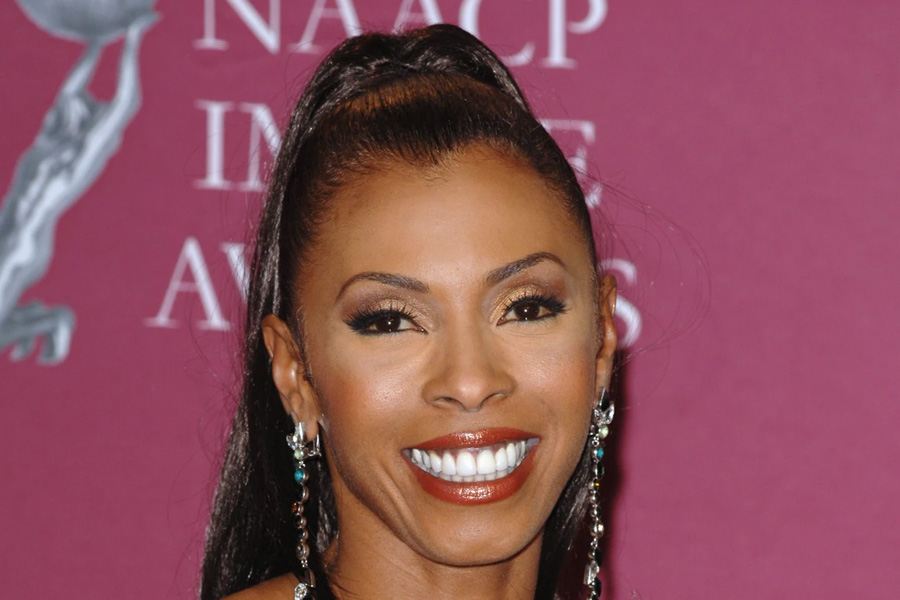
Khandi is the most public continuation of Alverina’s line. Born in 1957, she trained as a dancer and choreographer, toured with major performers, and later translated that stage discipline into acting. Her Broadway work and television roles show a disciplined performer whose instincts were likely shaped at home. When I see Khandi on screen, I sense a lineage of phrasing and timing, the same musical intelligence that resides in the voice of her mother.
Henry Roland Alexander
Henry appears in records as Khandi’s father. He owned or ran a business, and he was part of the household that raised a child who would move fluidly between dance and acting. He is a quieter figure in public records, a kind of steady support in the background.
Joshua Masters
Joshua is a name that appears in genealogical sources as a parent in Alverina’s family tree. Genealogy often supplies the scaffold for stories. Joshua’s presence gives the family history depth beyond the stage.
Clarence Carter and Candi Staton and Clarence Carter Jr.
These names represent a parallel American musical branch. Clarence Carter and Candi Staton were prominent figures in soul music. Clarence Jr. was born into that environment in the early 1970s. I include them not because they are direct kin of Alverina but because their presence in the musical ecosystem helps me situate her era and the conversations her household would have had about voice, performance, and the possibilities of a life in arts.
FAQ
Who was Alverina Yavonna in simple terms?
I see her as an opera and jazz singer born around 1932 who created a home in which music mattered. Her public footprint is modest, but her private influence is significant, most visibly in the career of her daughter.
Did Alverina have recordings I can listen to?
There are no widely available commercial recordings publicly associated with her name. Her career appears to have been rooted in live performance and local engagements rather than in national discography.
When did she live and what are the key dates?
She was born circa 1932 and died December 17, 1979. Her daughter Khandi was born September 4, 1957.
What is known about her finances and career earnings?
There are no public financial records or estates that detail income. For many regional performers of her time, income streams were varied and local. Teaching, recitals, church work, and club dates were common sources of support.
How does her legacy live on today?
Her legacy lives through the people she raised and influenced. The clearest bearer is her daughter, who turned that early musical language into a public career on stage and on screen. The rest of the legacy is oral and local, present in family memory and in the small documents that survive.