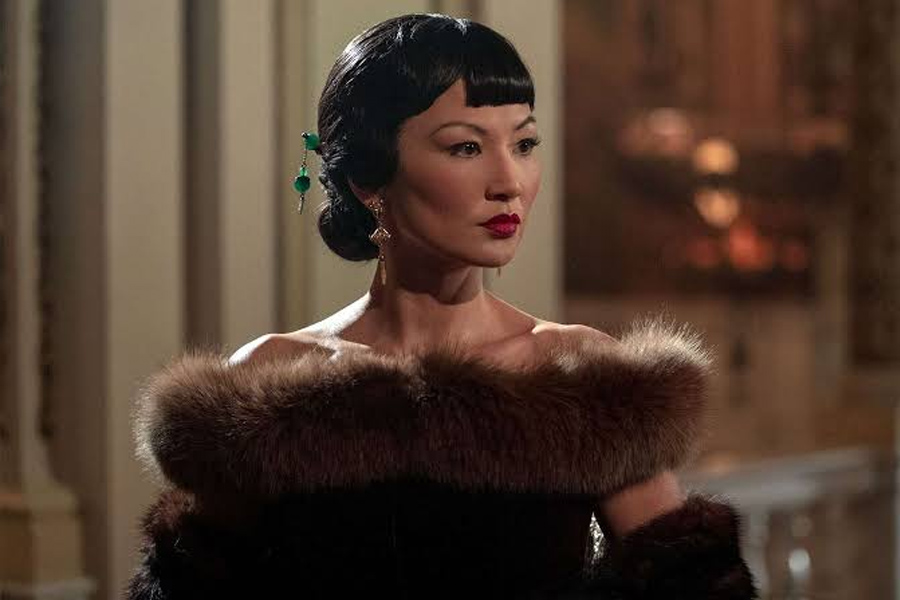
I have always found Ana May Wong’s story inspiring because it combines extraordinary talent, determination, heartbreak, and resilience. Long before diversity became an industry goal, she challenged barriers that seemed impossible to overcome. She became the first Chinese American movie star to achieve international fame while carrying the hopes of a community that often faced discrimination and exclusion.
Her life was not simply about cinema. It was also about family, identity, ambition, and the courage to create opportunities when none seemed available.
Basic Information
| Information | Details |
|---|---|
| Birth name | Wong Liu Tsong |
| Stage name | Ana May Wong (commonly known as Anna May Wong) |
| Birth | January 3, 1905 |
| Birthplace | Los Angeles, California, United States |
| Death | February 3, 1961 |
| Age at death | 56 |
| Nationality | American |
| Heritage | Third generation Chinese American |
| Parents | Wong Sam Sing and Lee Gon Toy |
| Occupation | Actress, stage performer, radio personality, television pioneer |
| Active years | 1919 to 1961 |
| Notable works | The Toll of the Sea, The Thief of Bagdad, Piccadilly, Shanghai Express, Daughter of Shanghai |
| Marital status | Never married |
| Children | None |
Early Life and Family Roots
I see Ana May Wong’s childhood as the foundation of everything she later achieved. She was born Wong Liu Tsong on January 3, 1905, in Los Angeles, California. Her Chinese name has often been interpreted as meaning “Frosted Yellow Willows,” a poetic image that reflected both beauty and resilience.
Her family traced its roots to Taishan in Guangdong Province, China. Her grandparents arrived in California during the mid 1850s, making the family among the earlier Chinese American settlers in the western United States. Her paternal grandfather worked as a merchant during California’s gold mining era, while later generations established themselves through hard work in the laundry business.
Growing up, I imagine her life balancing two very different worlds. At home, she helped her parents operate Sam Kee Laundry in and around Los Angeles’ Chinatown. Outside the family business, she experienced prejudice and bullying because of her Chinese heritage. Those difficult experiences eventually led her parents to transfer her and one of her sisters to a Chinese Mission School.
Even as a child, movies fascinated her like a magnet. She often watched film productions whenever they appeared nearby, earning the nickname “Curious Chinese Child.” Around the ages of 9 to 11, she created the stage name Ana May Wong by combining her English nickname with her Chinese family name.
Her Parents
Ana May Wong’s parents played significant roles in shaping her life, even though they initially questioned her career ambitions.
Her father, Wong Sam Sing, was a second generation Chinese American born around 1858 in California. He owned and operated the family laundry business that supported their large household. Like many immigrant parents, he valued stability and hard work. At first, he opposed his daughter’s dream of becoming an actress because acting carried social stigma within many Chinese communities.
Her mother, Lee Gon Toy, was also a second generation Chinese American and was born in the San Francisco area. She maintained close family ties while raising a large household. Her tragic death in 1930 after being struck by an automobile deeply affected Ana May Wong and remained one of the greatest sorrows of her life.
Brothers and Sisters
Family remained central throughout Ana May Wong’s life. Although her career took her around the world, she stayed closely connected to her siblings and often supported them financially.
Her older sister Lew Ying, commonly called Lulu, was perhaps her closest lifelong companion. Lulu accompanied her on European travels and shared many important moments away from Hollywood.
Her sister Mary Wong, born in 1910, reportedly appeared in small film roles before her death in 1940. Mary was buried alongside both their mother and Ana May Wong.
Her brothers included James Norman, Frank Way, Roger Sam, and Richard Wong. Richard became especially important during Ana May Wong’s later years. He lived with her in Santa Monica and inherited much of her estate after her death.
The family also experienced heartbreaking loss when Marietta, an infant sister born in 1919, died in 1920.
Despite the demands of international fame, Ana May Wong remained generous toward her relatives. She regularly helped siblings financially and invested in real estate that strengthened the family’s long term security.
Entering Hollywood
At only 14 years old, Ana May Wong appeared as an extra in The Red Lantern in 1919. Her determination grew quickly, and by 1921 she left Los Angeles High School to pursue acting full time.
Her breakthrough arrived in 1922 with The Toll of the Sea. The film became one of the earliest Technicolor productions and showcased both her expressive acting and remarkable screen presence.
Hollywood recognized her talent, yet it repeatedly limited her opportunities. She often received stereotypical roles such as mysterious villains or tragic heroines. Industry rules and racial prejudice prevented her from portraying many leading romantic characters.
One of the greatest disappointments came when she was denied the role of O Lan in The Good Earth despite being one of the most accomplished Chinese American actresses of her generation.
A Brilliant European Career
Her European years are probably her most interesting. Hollywood’s constraints drove her to Europe in March 1928 for better prospects.
The relocation changed her career.
In Germany, she worked with Richard Eichberg on Schmutziges Geld (1928), Großstadtschmetterling (1929), and Der Weg zur Schande (1930). Instead of stereotyping her, European audiences accepted her as a worldwide star.
She achieved her greatest European success with Piccadilly in 1929. She dazzled as ambitious dancer Shosho, outperforming many of her co-stars. The film was a silent era classic and garnered British acclaim.
She adjusted well to sound films. Her multilingualism shined in The Flame of Love (1930), which was made in English, German, and French.
She moved from movies to stage. She appeared in The Circle of Chalk with a teenage Laurence Olivier and in Vienna’s opera Tschun Tschi. She studied pronunciation, German, and French, and performed singing and dancing on stage.
Europe opened up new opportunities for her talent.
Career Achievements
Across more than four decades, Ana May Wong built a remarkably diverse career.
Some of her most important milestones include:
| Year | Achievement |
|---|---|
| 1919 | Film debut as an extra in The Red Lantern |
| 1922 | Breakthrough performance in The Toll of the Sea |
| 1924 | Appeared in The Thief of Bagdad |
| 1924 | Founded Anna May Wong Productions |
| 1928 | Left Hollywood for Europe |
| 1929 | International acclaim through Piccadilly |
| 1932 | Starred in Shanghai Express |
| 1936 | Visited China to reconnect with her heritage |
| 1937 | Played a romantic lead in Daughter of Shanghai |
| 1951 | Led The Gallery of Madame Liu-Tsong, the first American television series starring an Asian American lead |
| 1960 | Received a star on the Hollywood Walk of Fame |
Over her career, she appeared in more than 60 films while also performing in vaudeville, theater, radio, and television.
Style, Fashion, and Public Image
Ana May Wong became much more than an actress. She emerged as an international fashion icon during the 1920s and 1930s.
She blended elegant flapper styles with Chinese inspired designs, creating a look that was sophisticated and unmistakably her own. In 1934, the Mayfair Mannequin Society named her the world’s best dressed woman.
Her influence extended beyond clothing. She challenged outdated ideas about Asian women by portraying intelligence, confidence, and independence whenever scripts allowed her to do so.
Personal Life and Later Years
Ana May Wong never married or had kids. Despite romantic relationships and marriage proposals, she chose independence while juggling race, job, and societal expectations.
She was supposed to be friends with various celebrities, however many reports were unsubstantiated. Family devotion is her trademark.
She owns California and London real estate, collects jade, artwork, and luxury furnishings, and enjoys jazz. She also supported China humanitarian charities.
Later in life, she battled cirrhosis and alcoholism. She died of a heart attack at home in Santa Monica on February 3, 1961. Her age was 56.
She left valuable real estate, jewels, artwork, and personal items. Her younger brother Richard Wong received most of the inheritance, although other family members had benefited from her lifelong financial support.
Legacy
Ana May Wong’s influence has continued to grow decades after her death.
In 2022, she became the first Asian American featured on a United States quarter. Her films have been restored for modern audiences, museums have organized exhibitions celebrating her career, and new biographies have explored both her artistic achievements and personal struggles.
Her life resembles a lighthouse standing against a storm. Each role she accepted, each barrier she challenged, and each journey she made illuminated a path that later generations of Asian American performers could follow.
FAQ
Who was Ana May Wong?
Ana May Wong was the first Chinese American movie star to achieve international recognition. She worked in silent films, sound films, theater, radio, and television from 1919 until 1961.
When and where was Ana May Wong born?
She was born as Wong Liu Tsong on January 3, 1905, in Los Angeles, California.
Who were Ana May Wong’s parents?
Her father was Wong Sam Sing, a laundry owner and second generation Chinese American. Her mother was Lee Gon Toy, who also came from a second generation Chinese American family.
How many siblings did Ana May Wong have?
She was one of seven or eight children. Her known siblings included Lew Ying, Mary Wong, James Norman, Frank Way, Roger Sam, Richard Wong, and Marietta, who died in infancy.
Why did Ana May Wong move to Europe?
She moved to Europe in 1928 because Hollywood repeatedly limited her to stereotypical roles. European filmmakers offered her more substantial characters and greater artistic freedom.
What are Ana May Wong’s most famous films?
Her best known films include The Toll of the Sea (1922), The Thief of Bagdad (1924), Piccadilly (1929), Shanghai Express (1932), and Daughter of Shanghai (1937).
Did Ana May Wong ever marry?
No. She never married and had no children, choosing to focus on her career and maintain her independence.
What television milestone did she achieve?
In 1951, she starred in The Gallery of Madame Liu-Tsong, the first American television series led by an Asian American actor.
What happened to her estate?
Her estate included real estate, jewelry, artwork, and valuable personal possessions. Most of it was inherited by her younger brother Richard Wong, while she had already provided financial support to several family members during her lifetime.
Why is Ana May Wong still remembered today?
She is remembered as a pioneering actress who challenged racial barriers, transformed opportunities for Asian American performers, became a fashion icon, and earned lasting recognition through honors such as a Hollywood Walk of Fame star and her appearance on a United States quarter.