From Infant Prodigy to Stage Sovereign
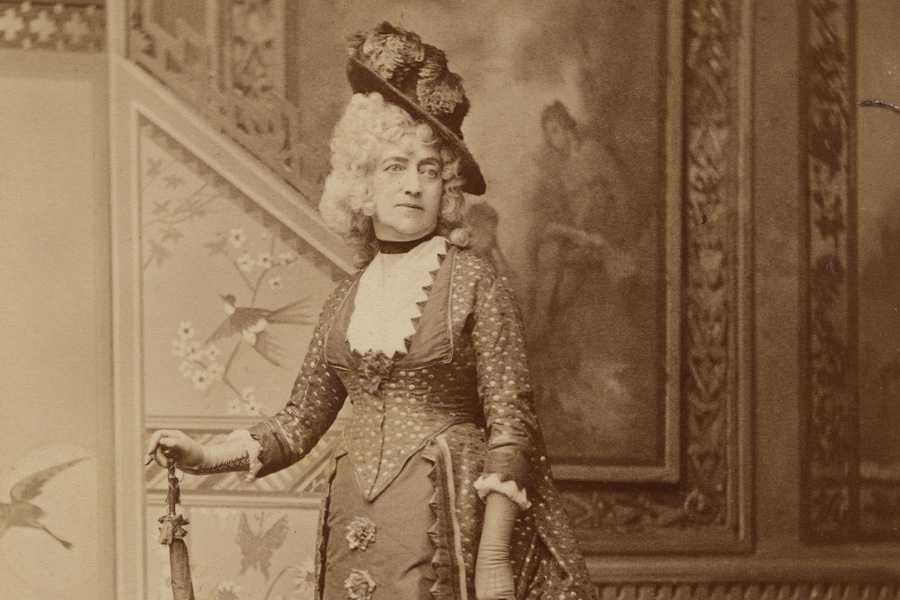
I have always marveled at lives that blaze across decades like shooting stars. Louisa Lane Drew was exactly that. Born January 10 1820 in London England she stepped onto the stage at nine months old in Giovanni in London. Instead of crying on cue she crowed with joy delighting the audience. By age eight she played adult roles. At 12 she performed all five characters in Twelve Precisely one right after another. Numbers tell the story: her career stretched 76 years from 1827 U.S. debut at Philadelphia’s Walnut Street Theatre to final bows in 1896.
She crossed the Atlantic at seven with her mother surviving shipwrecks and yellow fever outbreaks in Jamaica in 1830. Those early storms forged steel in her. I picture her as a tiny captain steering through chaos. By 1850 she had married three times. First to Henry B. Hunt in 1836 later divorced. Then to George Mossop in 1848 who died within a year. Her third marriage to John Drew Sr. in 1850 proved the anchor. Together they shaped American theater forever.
The Family Web: Roots Branches and Blossoming Dynasties
Drew did more than act. She created a famous bloodline. Her actors parents William Haycraft Lane and Eliza Trentner passed the torch early. Singer and tough guide Eliza pushed her daughter on every stage. William managed regional troupes before his line died out.
Four offspring of Louisa and John Drew Sr. carried the torch. Louisa Drew (1852) was an actress and mother to Georgie Drew Mendum. From 1853 to 1927, Broadway starring performer John Drew Jr. earned top salary. Georgiana Drew, born 1856, married Maurice Barrymore and had Ethel, John, and Lionel Barrymore. Sidney Drew, adopted around 1862, became a vaudeville star and father to Rankin Drew.
Grandchildren lit brighter fires. John and Ethel Barrymore were theatrical and screen legends. Daughter Louise Drew followed her father. Drew Mendum kept cousin Ethel close. Great-grandchildren Ethel Barrymore II John Drew Colt and Dolores Ethel Mae Barrymore expanded the reach into the 20th century. This family is strong like an oak. Louisa’s roots were deep. Every branch from John Drew Sr. marriage to Eliza Trenter Lane child had talent and grit.
Here is a clear family table I compiled to map the connections:
| Family Member | Relation to Louisa Lane Drew | Birth Death Years | Key Role or Note |
|---|---|---|---|
| William Haycraft Lane | Father | 1796 1835 | Provincial actor and manager |
| Eliza Trentner | Mother | 1796 1887 | Singer and lifelong stage companion |
| John Drew Sr. | Spouse | 1827 1862 | Comedian co manager of Arch Street |
| Louisa Drew | Daughter | 1852 1888 | Actress mother of Georgie Drew Mendum |
| John Drew Jr. | Son | 1853 1927 | Leading Broadway actor |
| Georgiana Drew | Daughter | 1856 1893 | Mother of Barrymore siblings |
| Sidney Drew | Adopted son | 1860s 1910s | Vaudeville comedian |
| Ethel Barrymore | Granddaughter | 1879 1959 | Tony Award namesake legend |
| John Barrymore | Grandson | 1882 1942 | Icon of stage and film |
| Georgie Drew Mendum | Granddaughter | 1870s 1900s | Actress and Ethel’s companion |
This table shows how one woman’s choices rippled across five generations.
Commanding the Arch Street Empire 1861 to 1892
Drew leased Philadelphia’s Arch Street Theatre in 1861. She immediately invested $7,000 in renovations. Numbered seats, air conditioning, and a full wardrobe appeared. She spent almost $20,000 rebuilding two years later after fire threats. The fireproof, family-friendly venue made money. Bars vanished. Backstage, white coveralls and felt slippers were required. She waved a scarlet scarf in displeasure. Daily rehearsals lasted four hours. Weekly gold salaries, no unpaid benefits. Leads earned $50/week. Three to five hundred stars cost.
By 1883, the theater made $20,000 profit. From $500 to $780 per share, stock value rose. She mentored many of upcoming stars while hosting burlesque. I liken her leadership to army command. Everything from lighting to timing aided the show. She retained the lease for 31 years until 1892, when the combination system made solo stock firms unsustainable. She appeared in the 1895–1896 all-star revival of The Rivals with Joseph Jefferson and her grandson Lionel Barrymore after retiring. Her 1899 posthumous Autobiographical Sketch recounted these years in her clear style.
Numbers That Defined a Life of Triumph
Dates and figures paint her strength. Born 1820 died August 31 1897 at age 77 in Larchmont New York. Buried in Philadelphia’s Mount Vernon Cemetery. She performed in Jamaica in 1830 survived six weeks on a makeshift raft after shipwreck. First U.S. appearance 1827 opposite Junius Brutus Booth. New York debut 1828. She played Romeo Lady Macbeth and Mark Antony. She shared bills with Edwin Booth and even John Wilkes Booth in Macbeth. As manager she banned rowdy patrons and turned the theater into America’s finest repertory house. These numbers prove one woman could out earn and outlast most men of her era.
FAQ
Who exactly was Louisa Lane Drew and why does her name still echo today?
Louisa Lane Drew was an English born actress and theater manager who built the Drew Barrymore acting dynasty. From child star in 1820 to theater owner for 31 years she shaped American stages with discipline and vision. Her descendants Ethel Barrymore and John Barrymore kept the spotlight burning bright.
How many children and grandchildren did she raise and guide?
She had four direct children: Louisa Drew John Drew Jr. Georgiana Drew and adopted Sidney Drew. She personally raised multiple grandchildren after Georgiana’s death in 1893 including the famous Barrymore trio. Great grandchildren like Ethel Barrymore II continued the line making her the root of over five generations of performers.
What made her theater management style revolutionary in the 1860s?
She invested seven thousand dollars immediately then twenty thousand more for rebuilds. She introduced weekly pay in gold four hour rehearsals dress codes and family friendly rules. Profits hit twenty thousand dollars by 1883. No other woman ran a major U.S. theater so successfully for three decades.
Which roles and tours defined her acting career before management?
She debuted at nine months played five parts in one night by age 12 and toured Jamaica in 1830. She acted opposite Junius Brutus Booth in 1827 and later Edwin Booth. Shakespeare parts like Romeo and Lady Macbeth plus Sheridan comedies such as Mrs. Malaprop in The Rivals showcased her range.
How did her family relationships shape the Barrymore stars we know?
Through daughter Georgiana Drew her grandchildren Ethel John and Lionel Barrymore learned the craft at her theater. She raised them after 1893 instilling the same work ethic that carried them to Hollywood. The entire tree from parents William Haycraft Lane and Eliza Trentner to modern descendants traces back to her iron will and love for the stage.